The Humidity Trap
Why does humidity make POTS symptoms worse?
Humidity prevents sweat from evaporating, which is the body’s primary way of cooling down. For those with POTS, this thermal stress causes blood vessels to dilate (widen) as the body tries to move heat to the skin. This leads to significant blood pooling in the legs, a drop in effective blood volume, and a compensatory spike in heart rate, dizziness, and fatigue.
The Northground Insight
In Australia, we often talk about "dry heat" vs. "humid heat." For a regulated nervous system, humidity is an annoyance. For a POTS nervous system, it’s a high-level threat signal. When your body can’t cool down, your brain enters a state of physiological panic.. This is why you might feel anxious or irritable on a humid day in Brisbane or Sydney—it’s not "in your head," it’s your Autonomic Nervous System (ANS) screaming for a reset.
Somatic Tip for Humidity
Try Temperature Titration.
Use a cold compress or an ice pack on your chest (the Vagus nerve highway) for 30 seconds, then remove it.
Notice any shift in your internal experience as the cold signals to your brain that the environment is safe and manageable.
Repeat as needed.
Need Support?
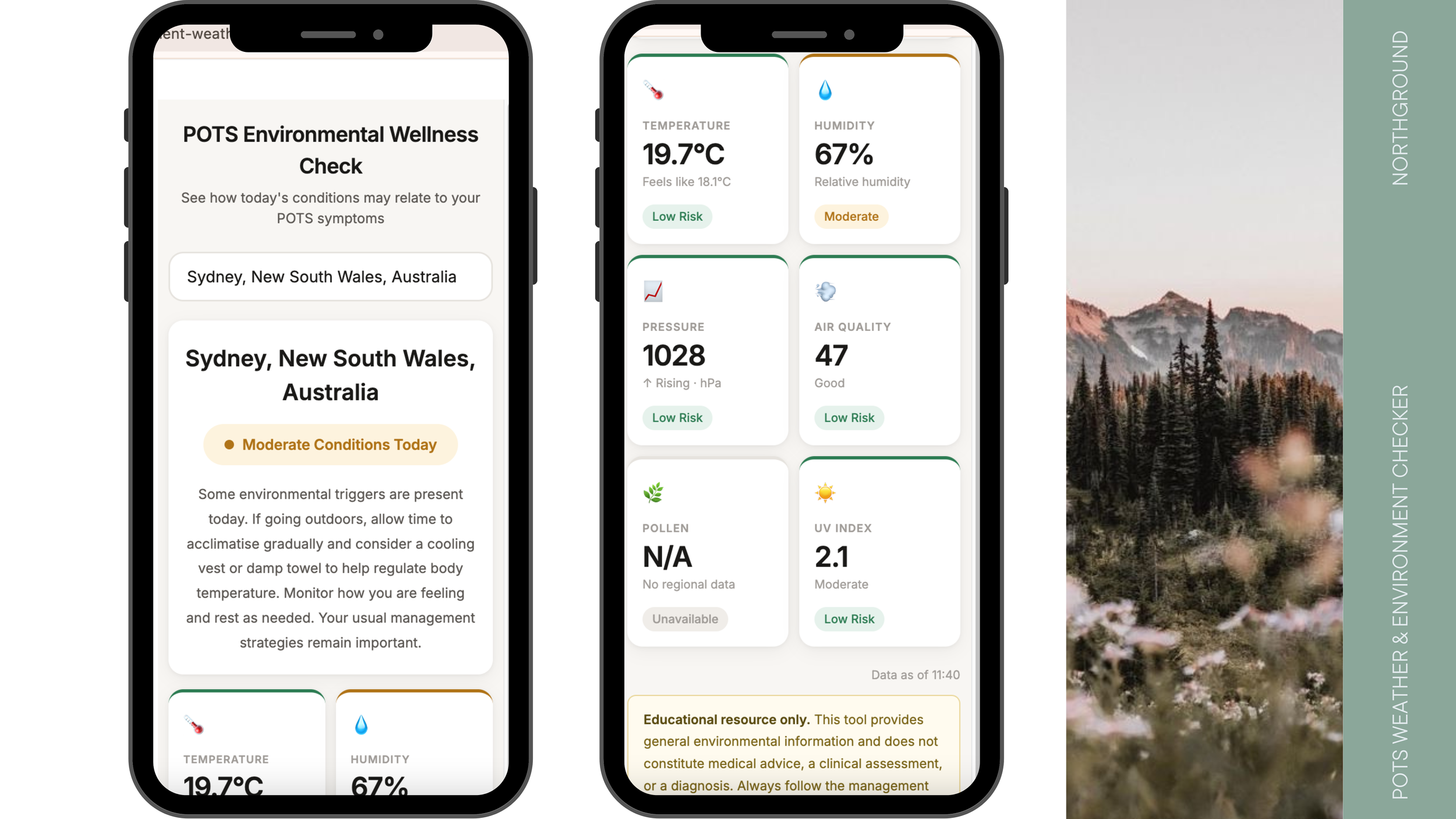
Many people living with POTS find that humidity, heat, barometric pressure, air quality and pollen levels are significant triggers for symptom flares.
Northground’s POTS Weather Tool provides real-time environmental data to help you manage heat intolerance and dysautonomia triggers daily
If you want to take the heat out of POTS, we are here to help:
Ready to start? Complete our New Client Intake Form here
Need more tools? Access the POTS Resource Hub for free somatic therapy downloads